- Project Year: 2024
- Location: Zapopan, Mexico
- Project Area: 320 m2
- Plot: 375 m2
- Built: 2026 -
- Design Team: Carlos Ruiz Palomino (Project leader), Pablo Huerta, Julia Zavala
- General Contractor: José Luis Huerta
- Poured Concrete: Rafael Pérez
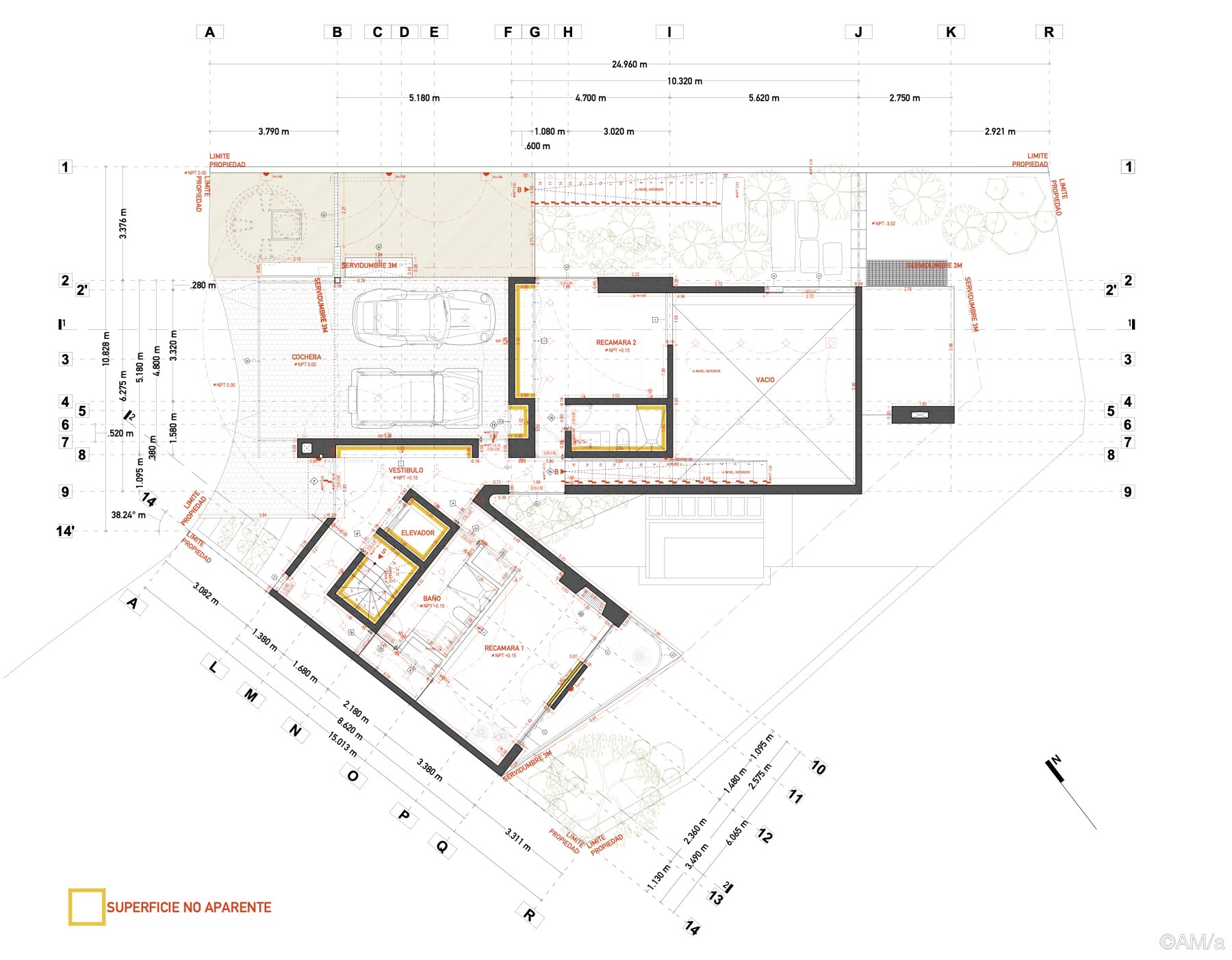
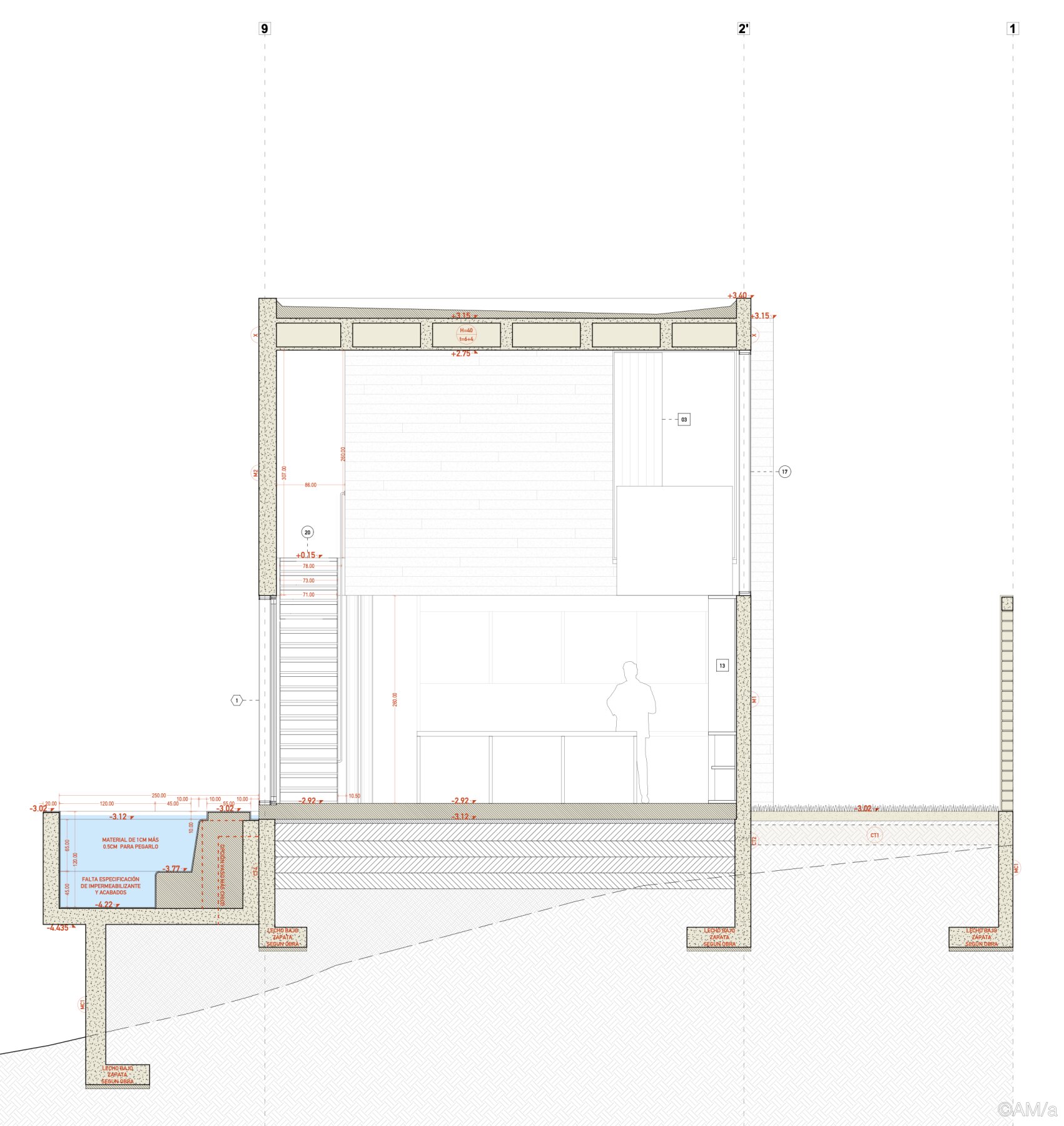
Casa MA is implanted in a ravine as a deliberate gesture of topographic subtraction: the building does not occupy the land but instead embeds itself within it, establishing a productive tension between the constructed and the pre-existing landscape. This condition of partial burial defines the project's distributive logic, which articulates three levels of living through section rather than plan, inverting the conventional hierarchy of access and habitation. Entry occurs at the intermediate level generating a spatial compression at the threshold that amplifies, by contrast, the vertical expansion of the interior as one descends toward the social areas.
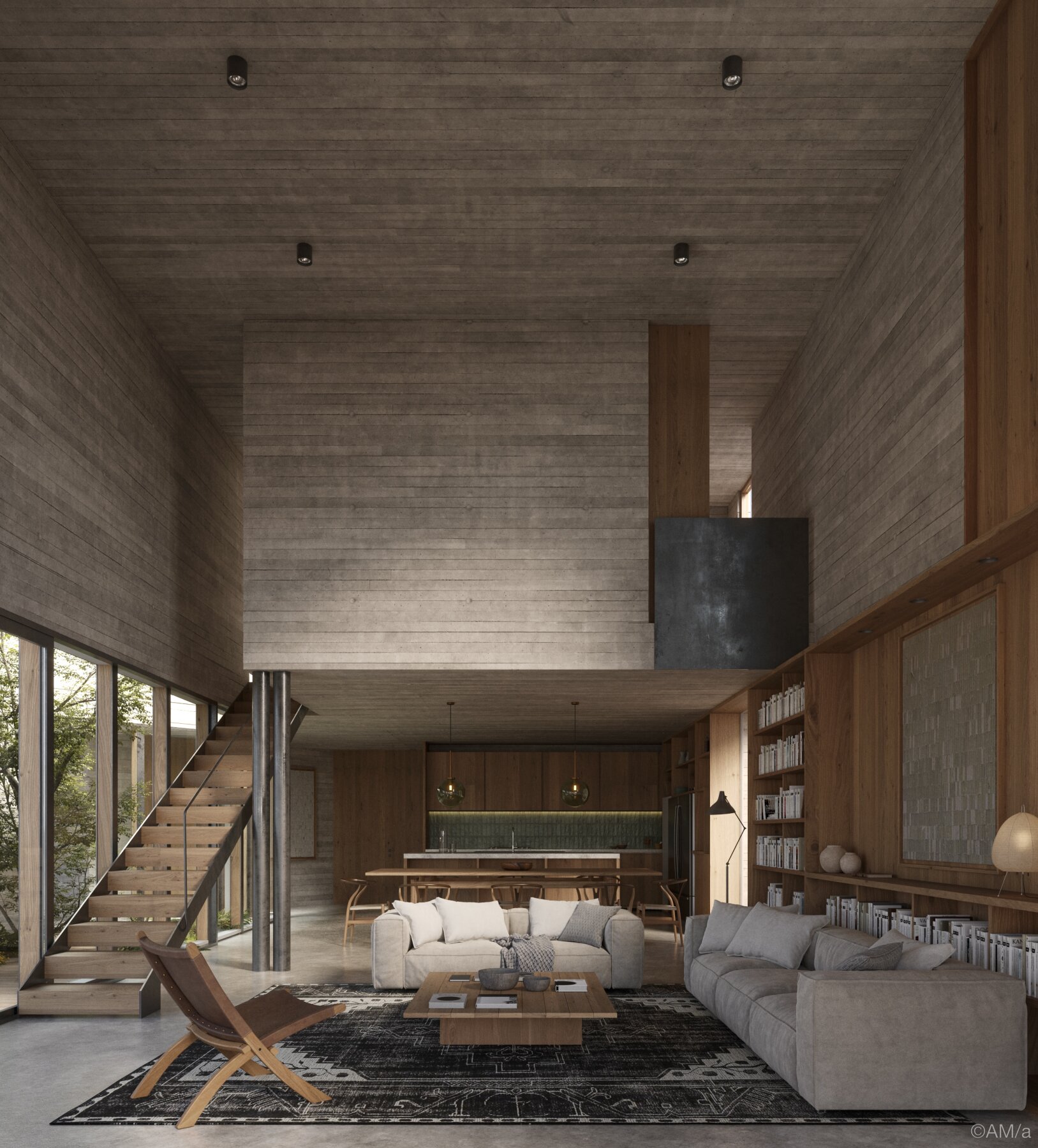
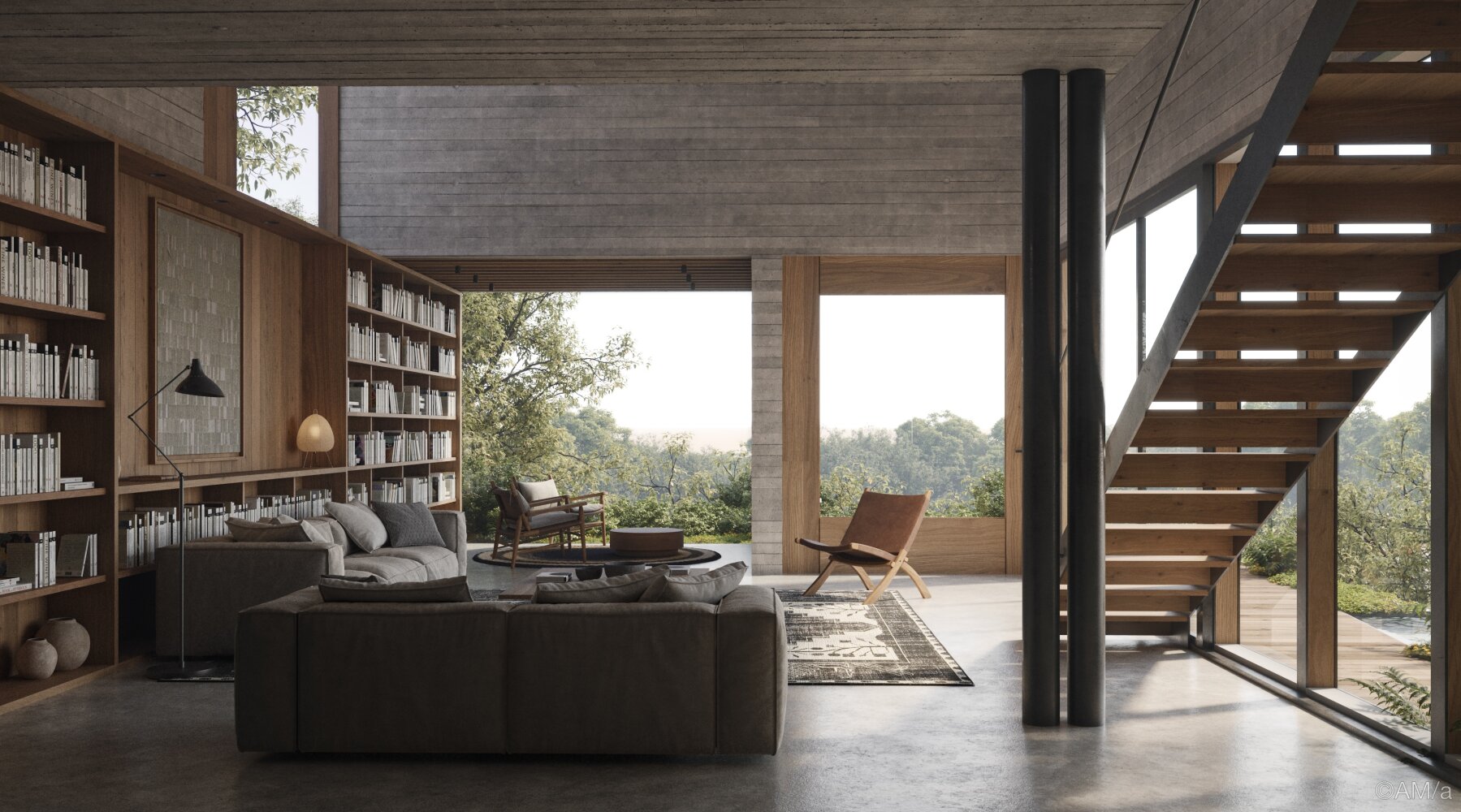
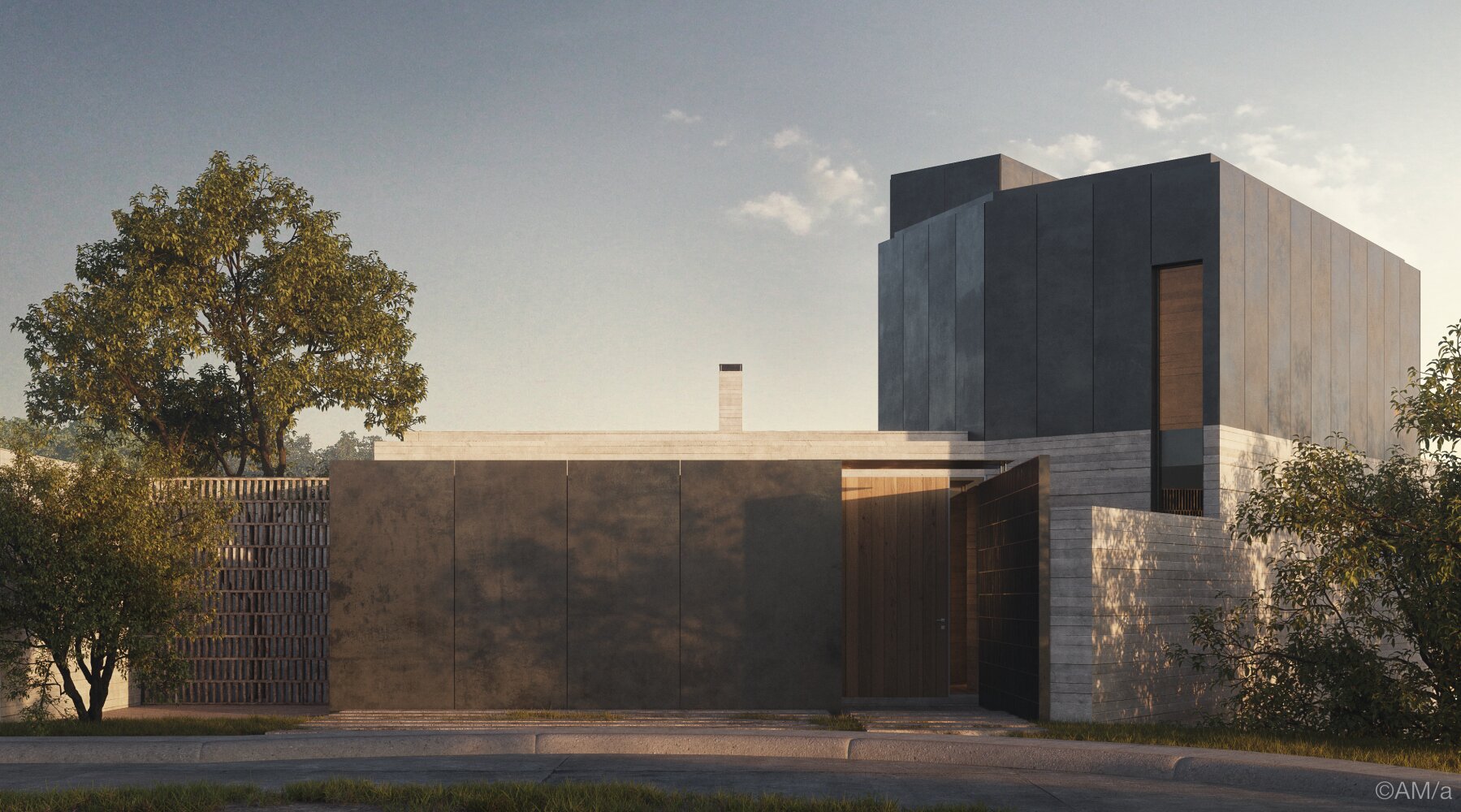
The sectional organization articulates a dialectic between containment and openness that constitutes the central spatial argument of the house. The street-facing façade presents itself as a massive, nearly hermetic wall of board-formed reinforced concrete, its horizontal joints raw matter as a tactile and temporal surface. This exterior hermeticism is not negation but preparation: the visitor moves through a sequence of compression — covered garage, timber portal, descending stair — before encountering a double-height living room where wood, concrete, and glass compose a spatiality that opens dramatically toward the garden and the ravine. The vertical section of the living room acts as a mediating device between the entry level and the natural ground, restoring to the inhabitant a bodily relationship with the geographic stratum that the implantation had suppressed.
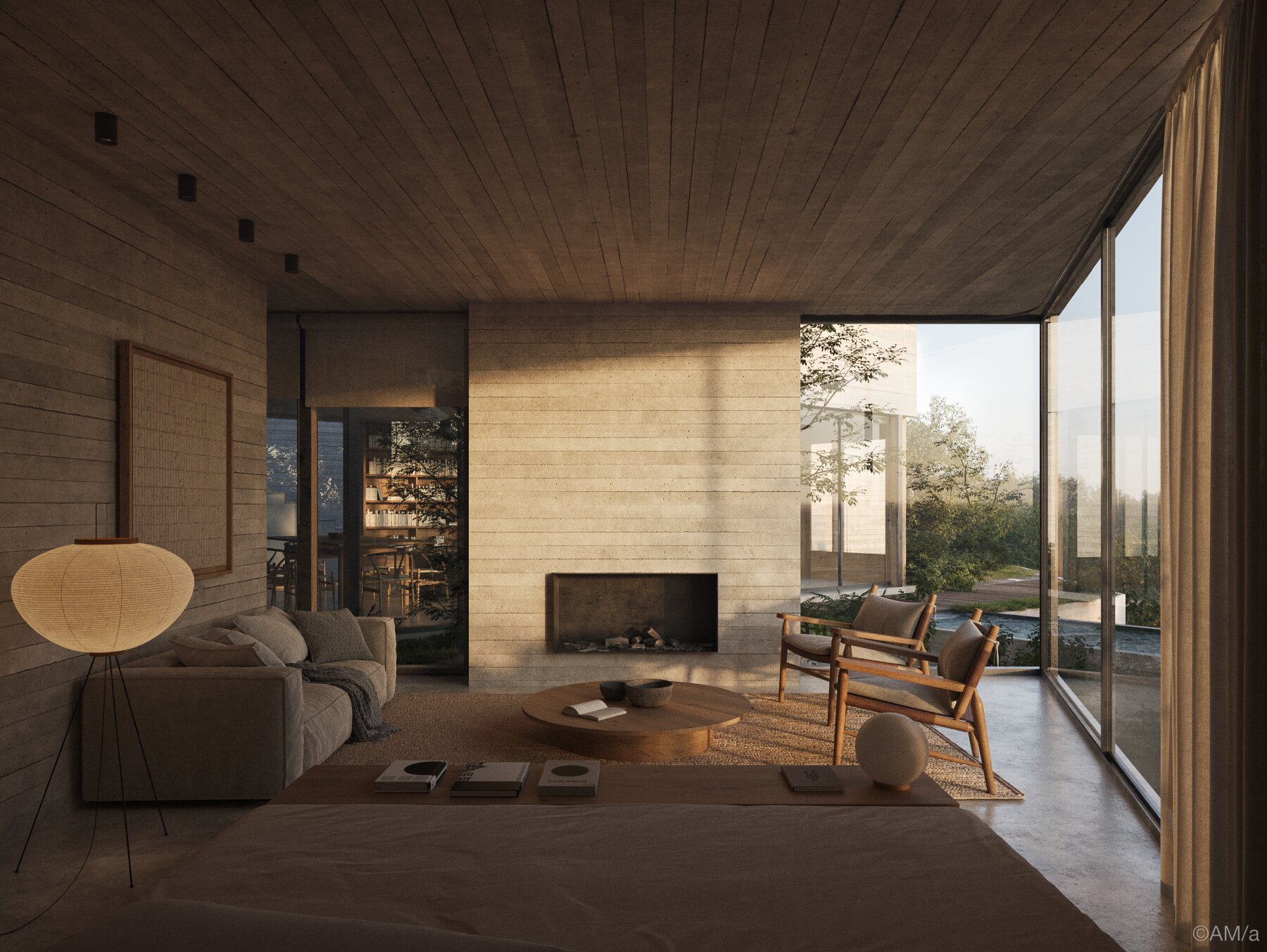
The choice of a four-material palette — reinforced concrete, wood, glass, and steel — is not austerity but semantic precision. Each material operates with a defined structural and phenomenological role: concrete provides mass, permanence, and the imprint of time in its formwork texture; wood — in walls, ceilings, shelving, and staircase — introduces tactile warmth and a domestic scale that humanizes the monumentality of the concrete skeleton; glass dissolves the boundaries between interior and exterior on the garden-facing façades, turning the ravine's vegetation into an active plane of the composition; steel appears with minimal precision — tubular profiles, hardware, the suspended fireplace volume — as the material that reveals the constructive honesty of the whole. This material economy inscribes the project within a contemporary brutalist genealogy that finds in technical limitation a form of poetic rigor.
The program, though modest in area, operates with the distributive efficiency of a much larger house: the secondary bedrooms and vertical circulation at the entry level free the ground floor entirely for the client's world, where the master suite with walk-in closet and bathroom integrates fluidly into the social areas without rigid hierarchies, encouraging fluid and contemporary modes of inhabitation. The living-library, with its wall of wooden shelving facing panoramic openings toward nature, condenses the project's sentimental program: a house conceived not as refuge from the exterior but as a device for intensifying the experience of dwelling within it. Casa MA demonstrates that the smallness of a program implies no limit on spatial ambition — rather, it offers the opportunity for a concentrated architecture in which every decision — material, structural, topographic — carries the weight of the whole.