- Project Year: 2024
- Location: Guadalajara, Mexico
- Plot: 1,114 m2
- Project Area: 822 m2
- Built: 2026 -
- Design Team: Carlos Ruiz Palomino (Project leader), Pablo Huerta, Julia Zavala
- General Contractor: José Luis Huerta
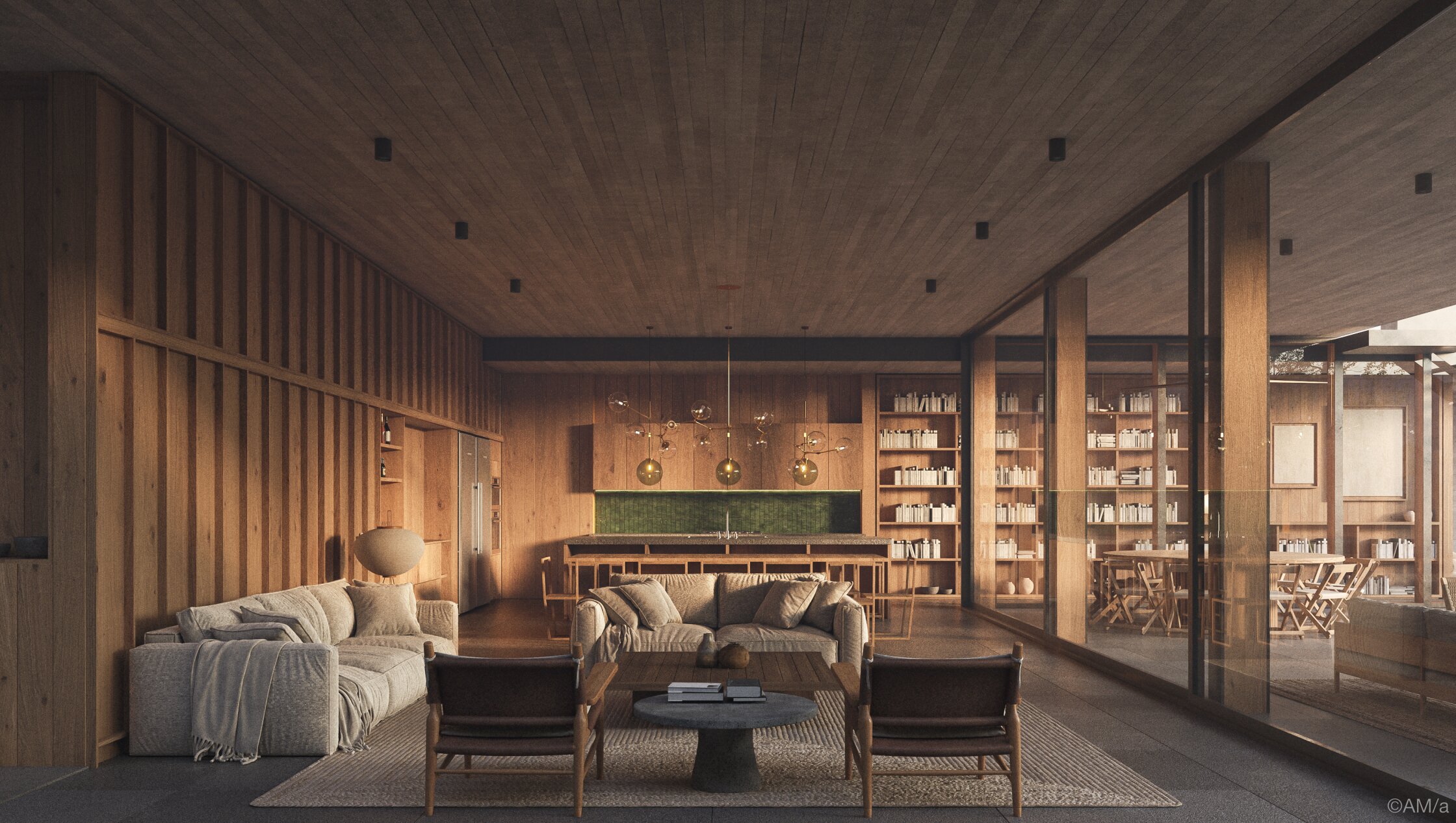
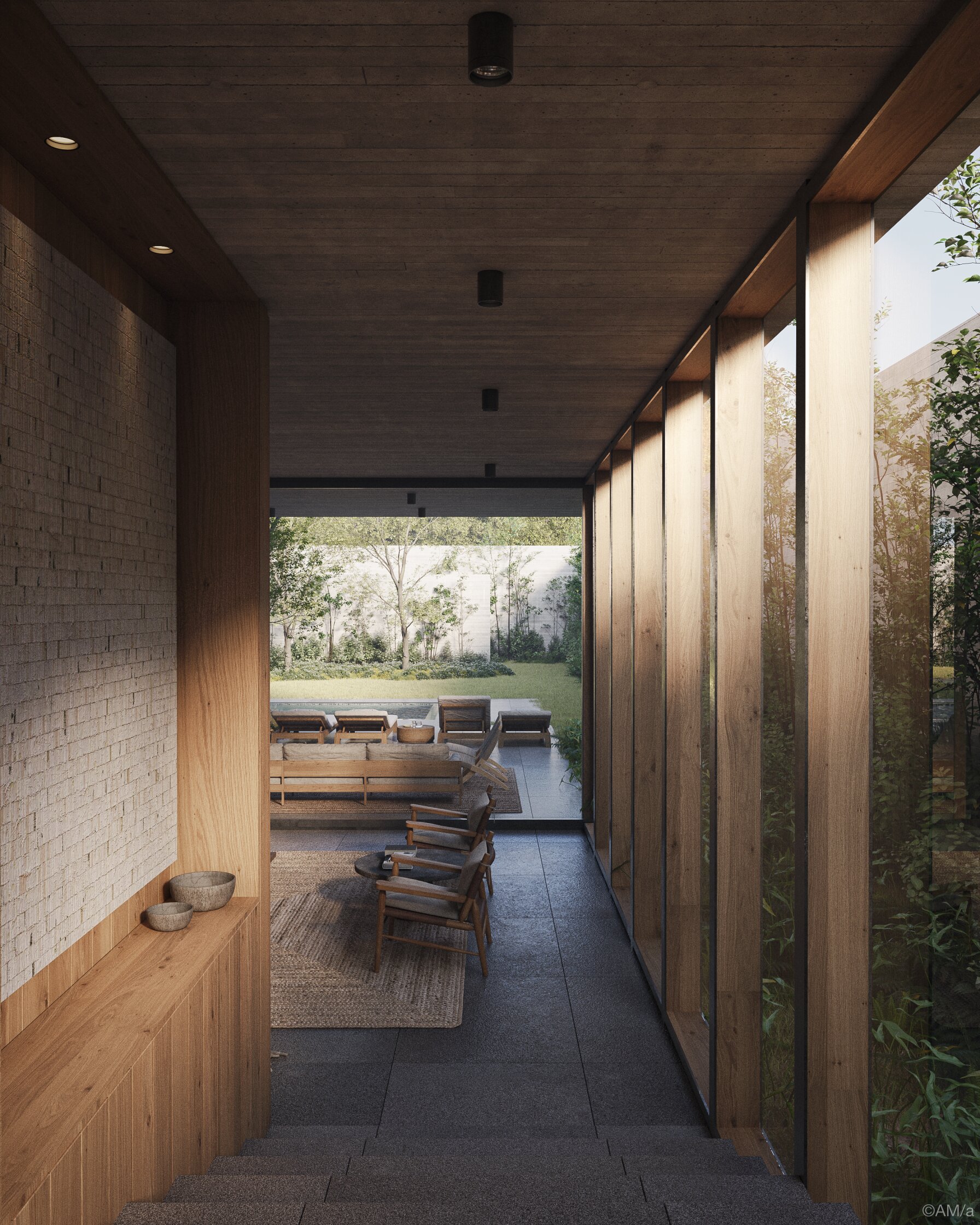
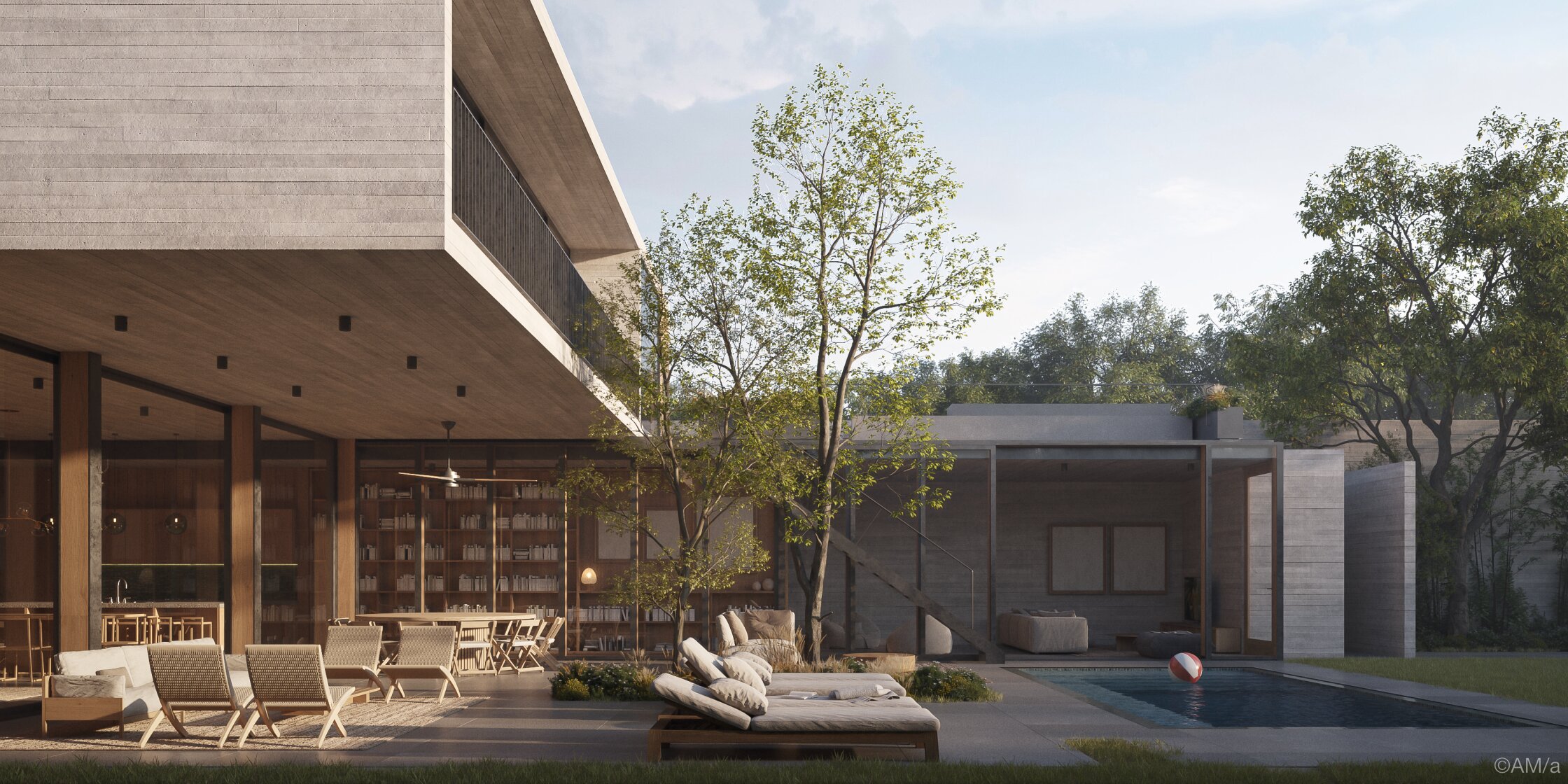
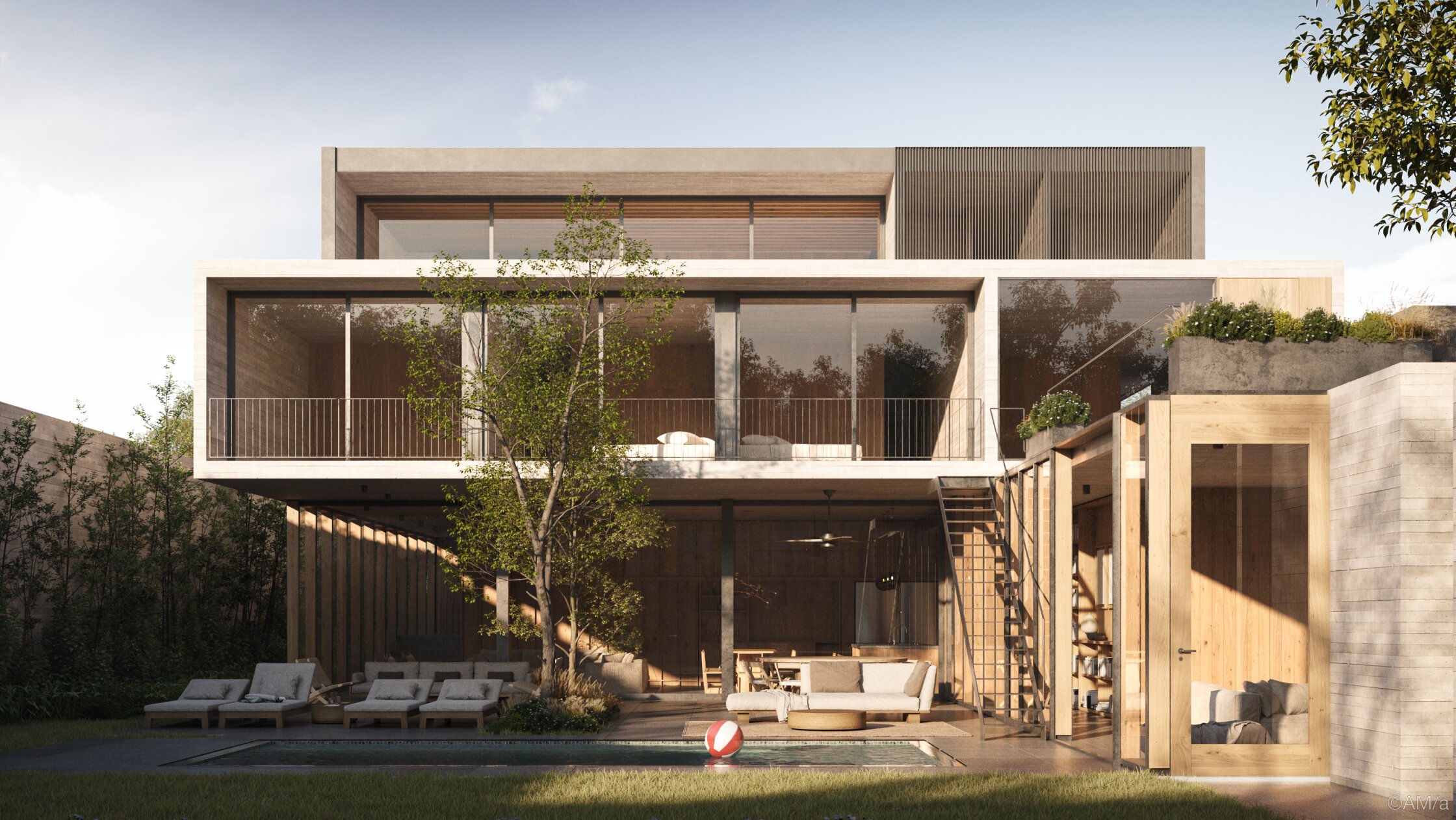
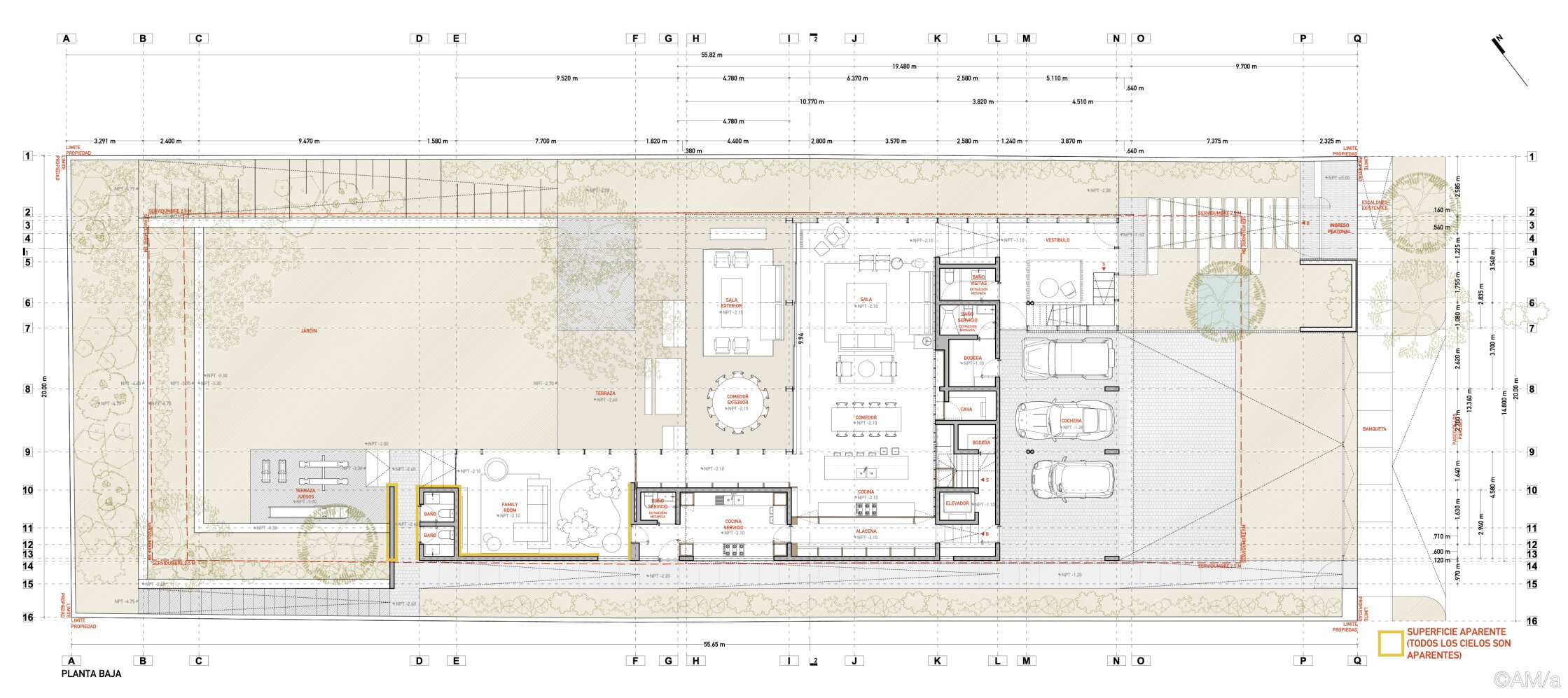
Casa BPR is conceived as a domestic device for contemporary family life, where the programmatic organization responds not to a rigid hierarchical zoning but to a calculated logic of intersection: spaces are arranged so that everyday routes generate encounters, so that transitions between areas produce sociability, so that the architecture itself acts as a catalyst for togetherness. The ground floor unfolds across the land — markedly longitudinal in proportion, nearly 56 meters long — a sequence of social spaces that chain together without interruption from the entry to the garden, operating according to a contemporary enfilade logic in which living room, dining room, kitchen, and family room articulate as stations along a single domestic promenade. This spatial continuity does not dissolve the identity of each room but rather underscores it: each area offers a distinct phenomenological experience — from the warm penumbra of the wood-lined interior to the luminous openness of the terrace overlooking the pool — without any of them being understood as a destination independent from the whole.
The L-shaped volume housing the service program constitutes the most sophisticated architectural gesture of the ground floor: by separating the social areas from the garage, this element is not merely functional but operates as a threshold, a space of mediation between the public world of the street and the private world of the garden. Within it, all the invisible infrastructure of the house is compressed — wine cellar, pantry, service kitchen, service staircase, staff rest areas — completely freeing the main body from any programmatic interference that might interrupt the fluidity of the family spaces. This distinction between served and servant spaces, indebted to the Kahnian lesson yet reinterpreted through a contemporary material sensibility, allows the main interior to be experienced as an uninterrupted continuum, where the only mediation between family life and the garden landscape is the glass plane that separates them and that, when slid open, merges them entirely.
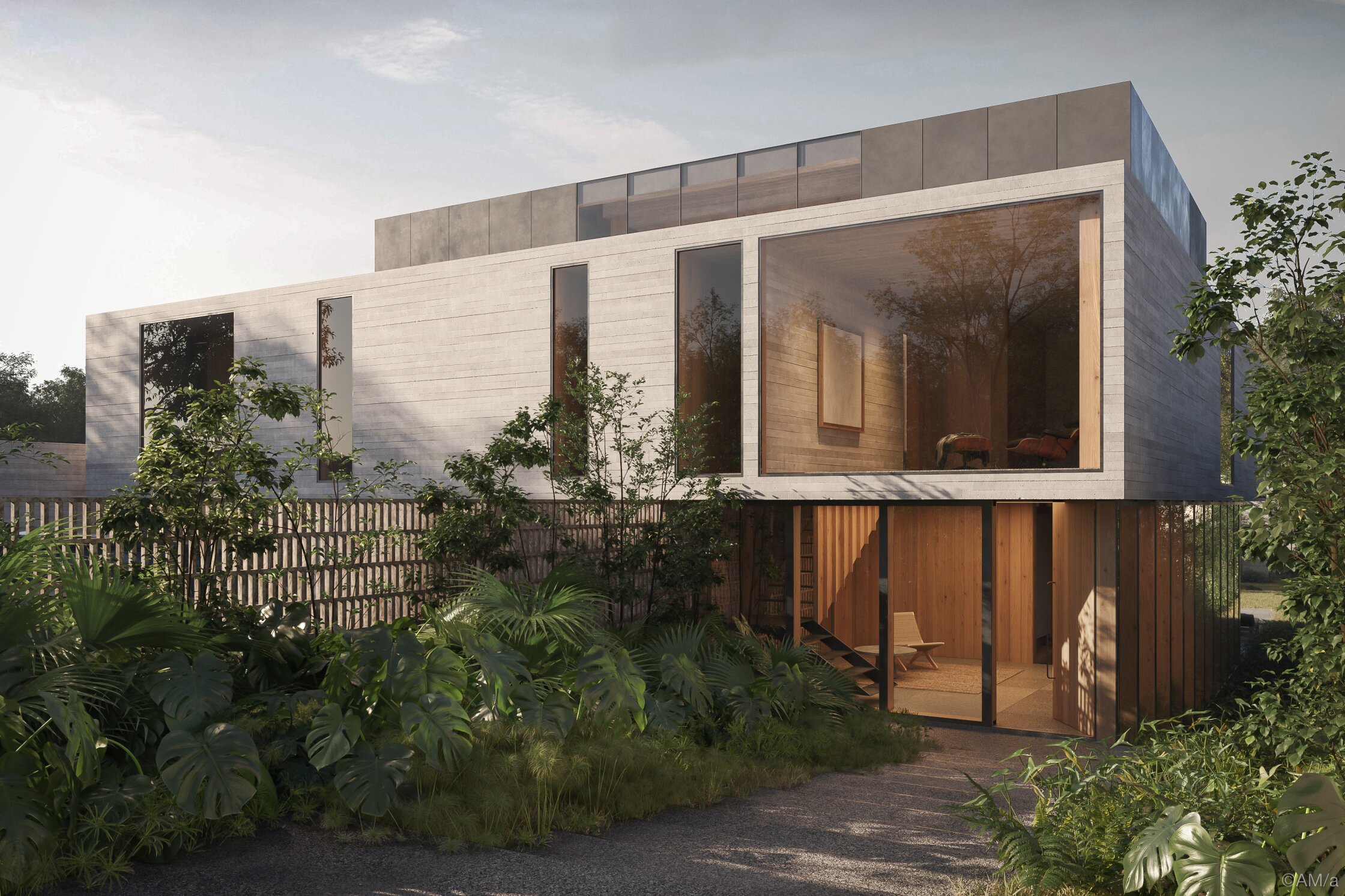
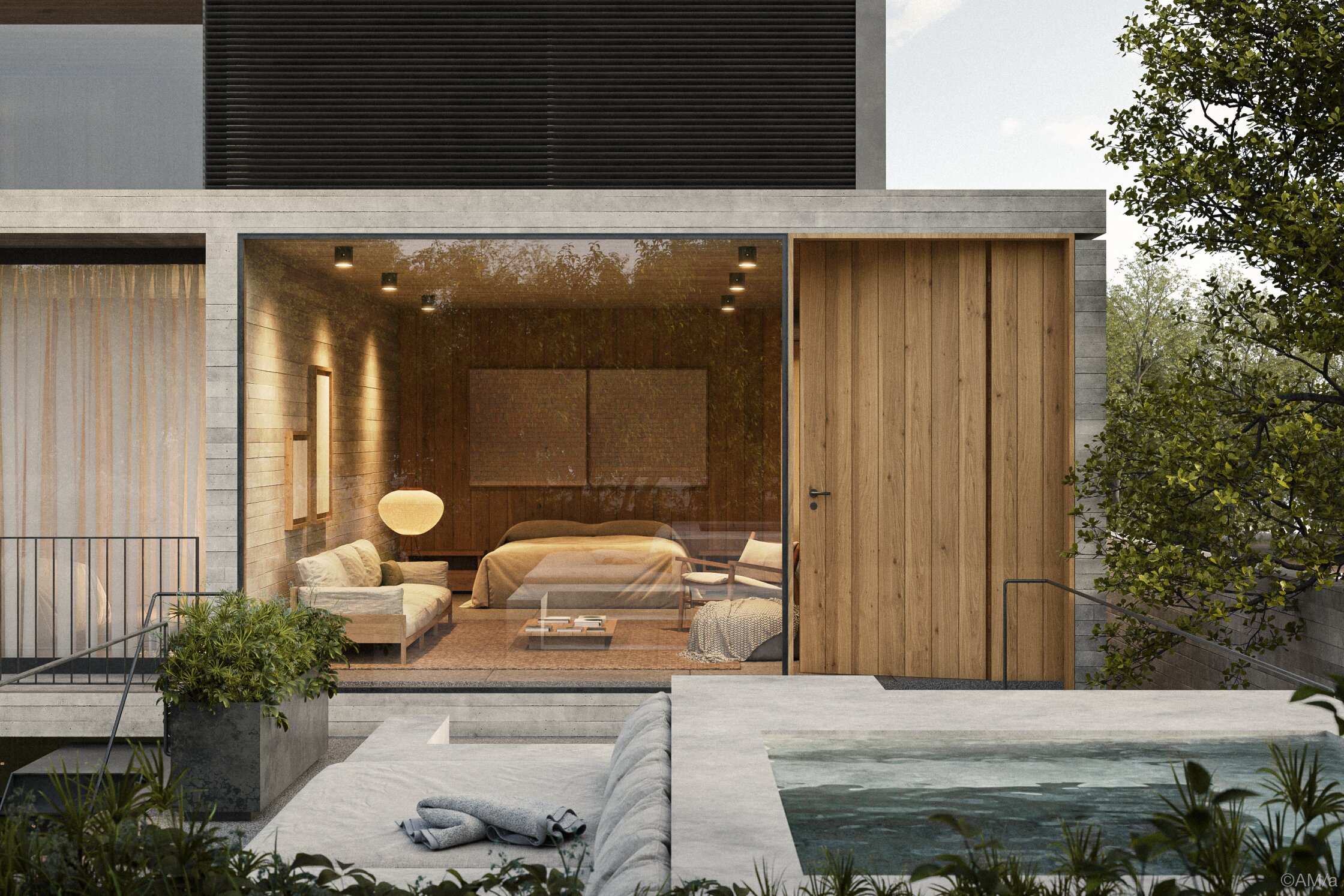
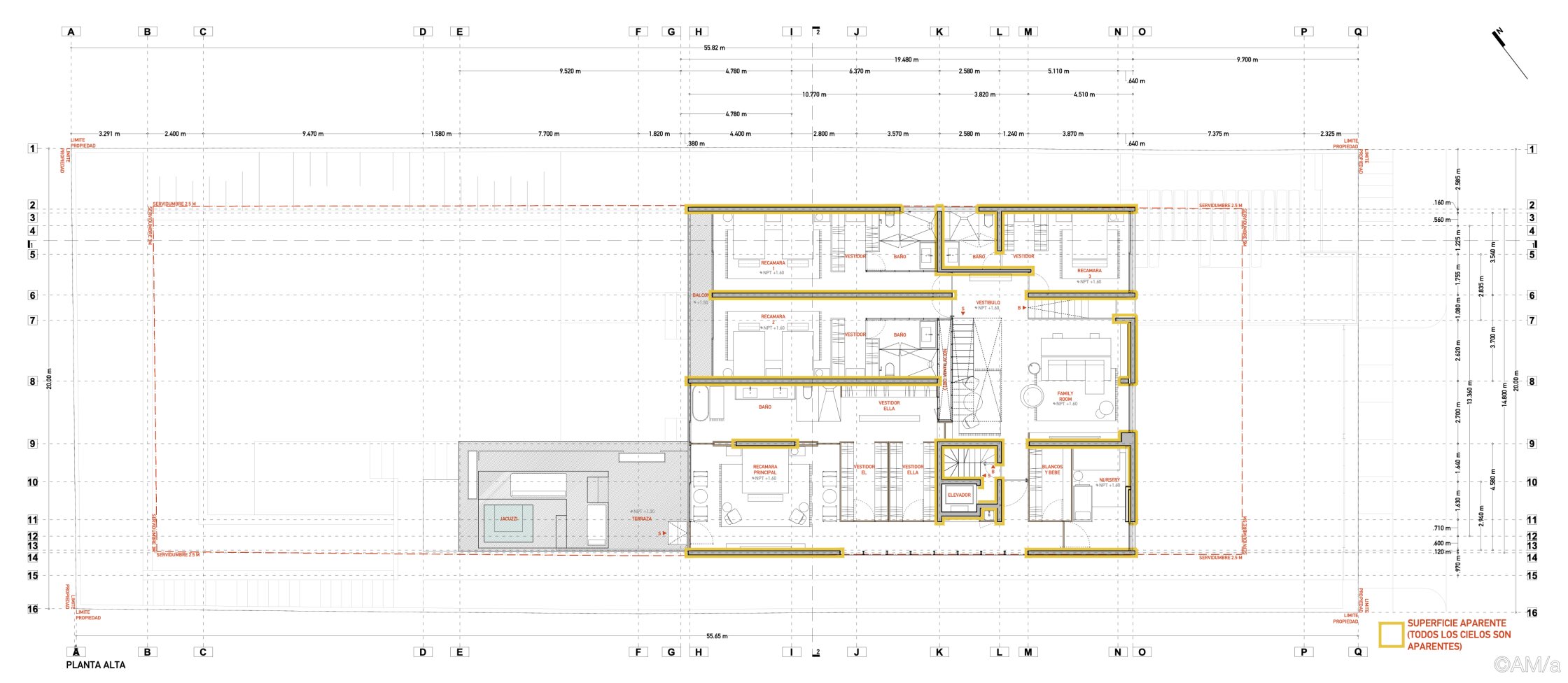
The vertical section of the project articulates a dialectic between heaviness and lightness that defines its tectonic character. The upper floor volume — concentrated in the middle of the lot and containing all the bedrooms, including the master suite with its his-and-hers walk-in closets, the nocturnal family room, the nursery, and the jacuzzi terrace — reads from the garden as a massive board-formed concrete body rising above the glazed base of the ground floor, generating a compositional tension between the opaque mass of the upper level and the transparency of the lower one. This inversion of conventional constructive logic — where weight typically settles downward — produces a gravitational ambiguity that energizes the rear façade and transforms the terrace space into a dramatic threshold: to inhabit that place is to be simultaneously sheltered by the shadow of the cantilever and exposed to the full breadth of the garden.
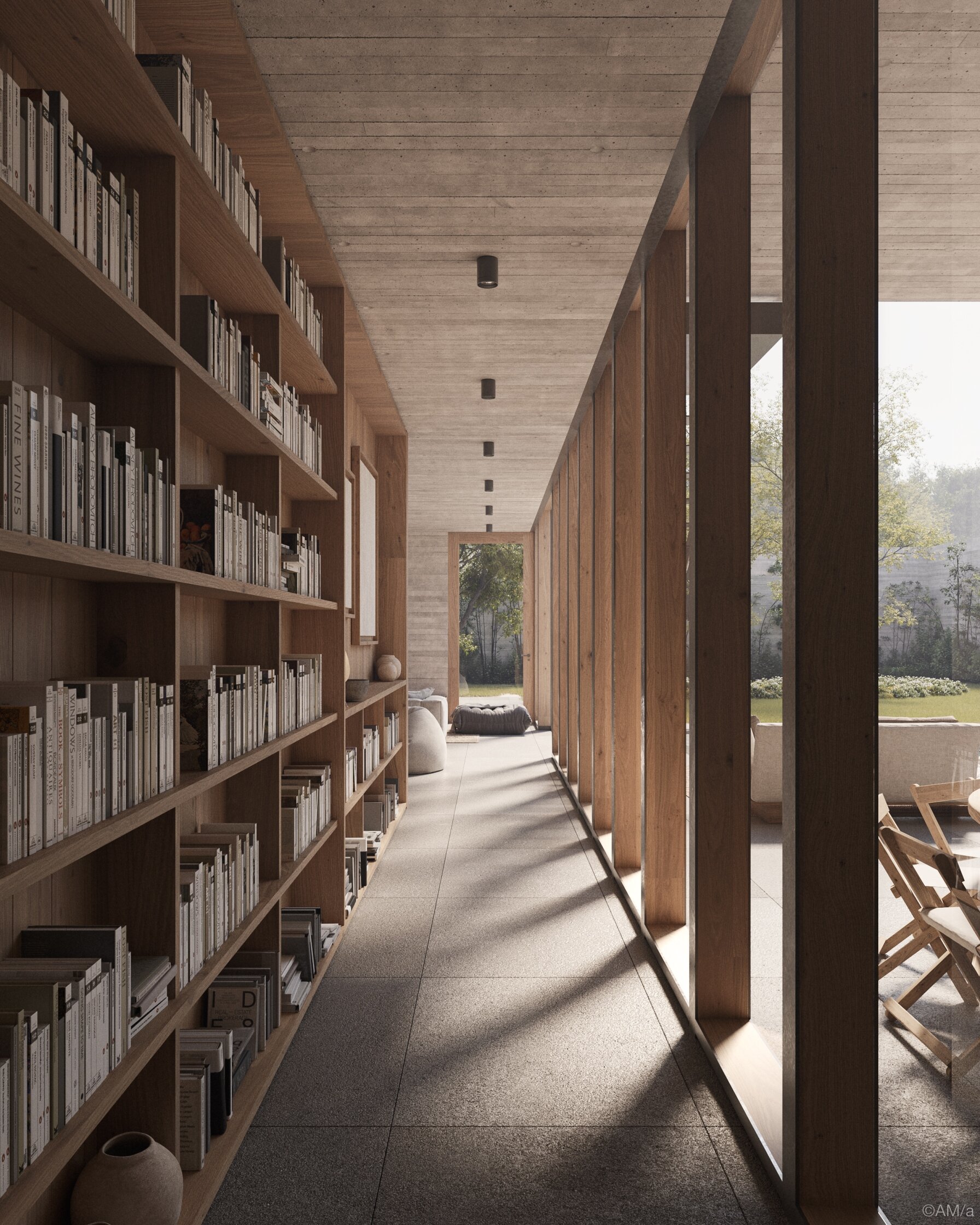
The interior of Casa BPR reveals an architecture of material warmth that contrasts with the severity of its concrete envelope. Wood — in walls, ceilings, shelving, and joinery — covers every interior surface with a homogeneity that reads not as monotonous but as meditative, creating environments of remarkable sensory intensity where natural light, filtered through wood frames and glass planes, produces chiaroscuro effects that transform the space throughout the course of the day. The library corridor that runs longitudinally through the social body of the ground floor deserves particular attention: it is simultaneously a space of transit and a space of permanence, gallery and reading room, functional connector and cultural argument that reveals the intellectual priorities of its inhabitants. In that space — where the wall of books dialogues with the frames opening to the garden and the wood volumes filter lateral light — Casa BPR reaches its most precise formulation: that of an architecture which understands family life not as a program to be solved, but as an experience to be intensified.